
The Stack
You don't hand-train a LoRA — you direct an agent to.
The little green guy in the margins — the one who keeps interrupting to point out when I’m being an idiot — is a custom-trained character model. I didn’t draw him. I didn’t hand-train him either. I described what I wanted and directed an agent through the whole thing, which is exactly how you’d do it too.
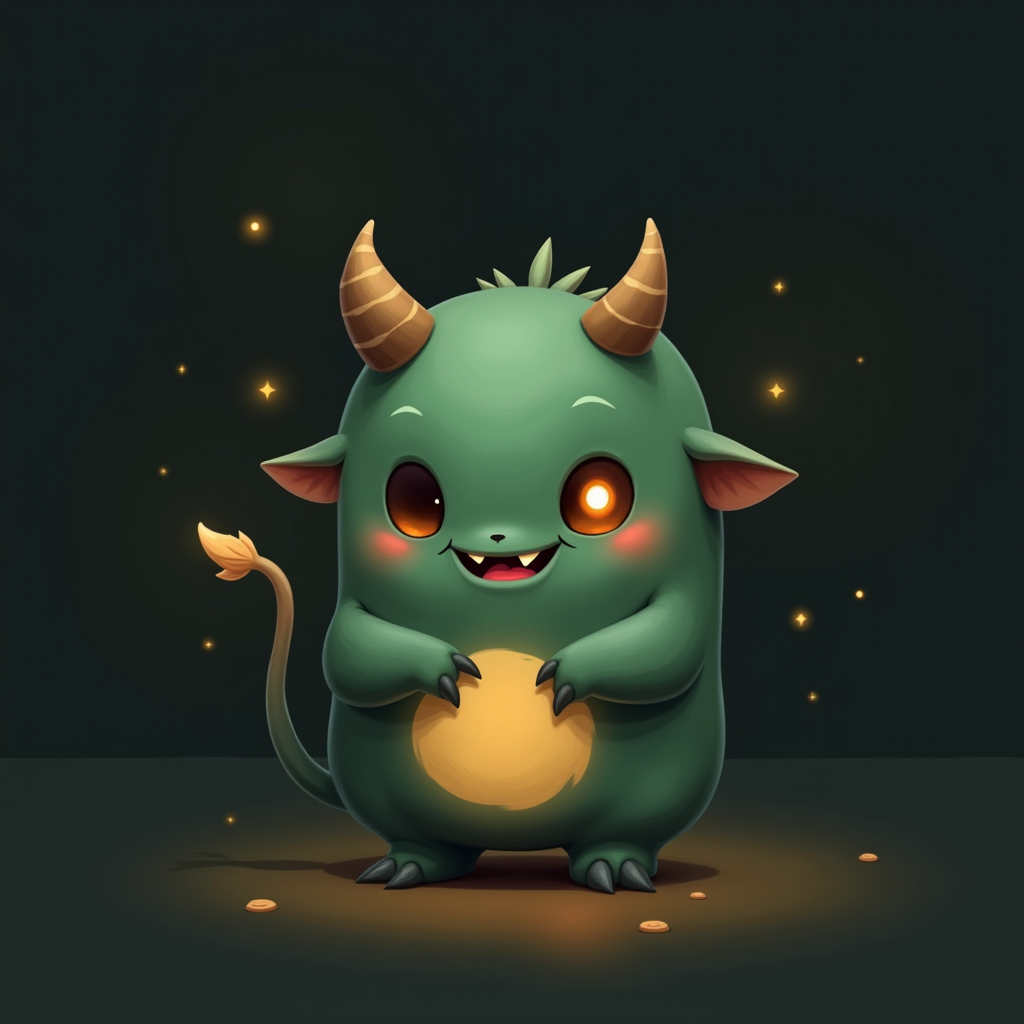
That’s the important part, so let me say it plainly: nobody hand-trains a character model from scratch anymore, and you don’t need to learn how. The skill has moved up a level — from doing the training to directing it, and knowing which decisions are still yours. So this post is for the person who wants a mascot for their brand and is going to get it the way I did: by asking an agent. I’ll skip the parts the agent handles and dwell on the four calls it can’t make for you.
(One-sentence primer: a LoRA is a small add-on you train onto an existing image model to teach it one specific thing — here, one specific character — so you can summon Nohup on demand, in any pose, forever.)
Decision 1: whether you even need one — and what job it does
The first and most important call has nothing to do with training. It’s why does this brand need a mascot at all, and “it’s cute” is a wrong answer that will cost you a weekend.
For Daemon Money the reason is specific: voice separation. Every post here has to stay sincere first-person — “here’s what this actually earned, here’s where it failed” only works if you believe me. The moment that voice turns snarky and self-aware, it corrodes its own honesty. But I want the snark; the wisecracks are half the fun. So Nohup exists to hold them. The memoir stays straight; the licensed wise-guy lives in the sidebar. That’s the whole reason he’s here.
And that decision — a decision about my content, made before any pixels existed — is what defined the training. It’s literally why the character needed a “pointing” pose and a “facepalm” pose: those are the tip boxes. The agent can generate a character all day; only you can decide what job it does in your writing. Get this wrong and you’ve trained a beautifully consistent mascot you have no use for.
Decision 2: which tool — and the thing the agent can’t know
Now a genuinely technical call, and one where I had to bring something the agent didn’t have.
I keep two character-training pipelines on the same GPU: an older one built on FLUX.1-dev — the model behind my other two mascots, Oppie (oppenfolio) and Barnaby (cubbywise) — and a newer one built on Krea-2, which I’d set up for a storybook-illustration project. Here’s the catch: I had to tell the agent that Krea-2 existed, because the model was released after its knowledge cutoff. That’s a normal, load-bearing part of directing an agent — I watch the new releases; it knows the techniques. I bring the frontier; it brings the execution. If you’re going to direct agents, keeping half an eye on what shipped last month is part of the job now.
We benchmarked the two. The newer model lost — for this job — and why it lost is the entire lesson. Krea-2 isn’t worse; it’s spectacular at the painterly, gouache storybook look I picked it for. It lost for Nohup because Nohup is a flat, clean-outline character, and Krea’s whole stack fights flatness — it actively steers away from it. Same “newest tool,” perfect for one project, wrong for the next. The deciding factor was never recency. It was style fit. The agent will cheerfully train on whatever base you point it at; pointing it at the right one — and being able to say why — is yours.
Decision 3: when the render argues back
I wrote a brief asking for flat editorial art, to match Oppie and Barnaby. The model disagreed.
The first batch came back soft, cute, faintly 3-D — and it came back that way consistently, across every random seed. One render even gave the character a glowing cursor for an eye without my ever prompting that exact thing. The spec said flat. The render said cute.
I kept the cute.
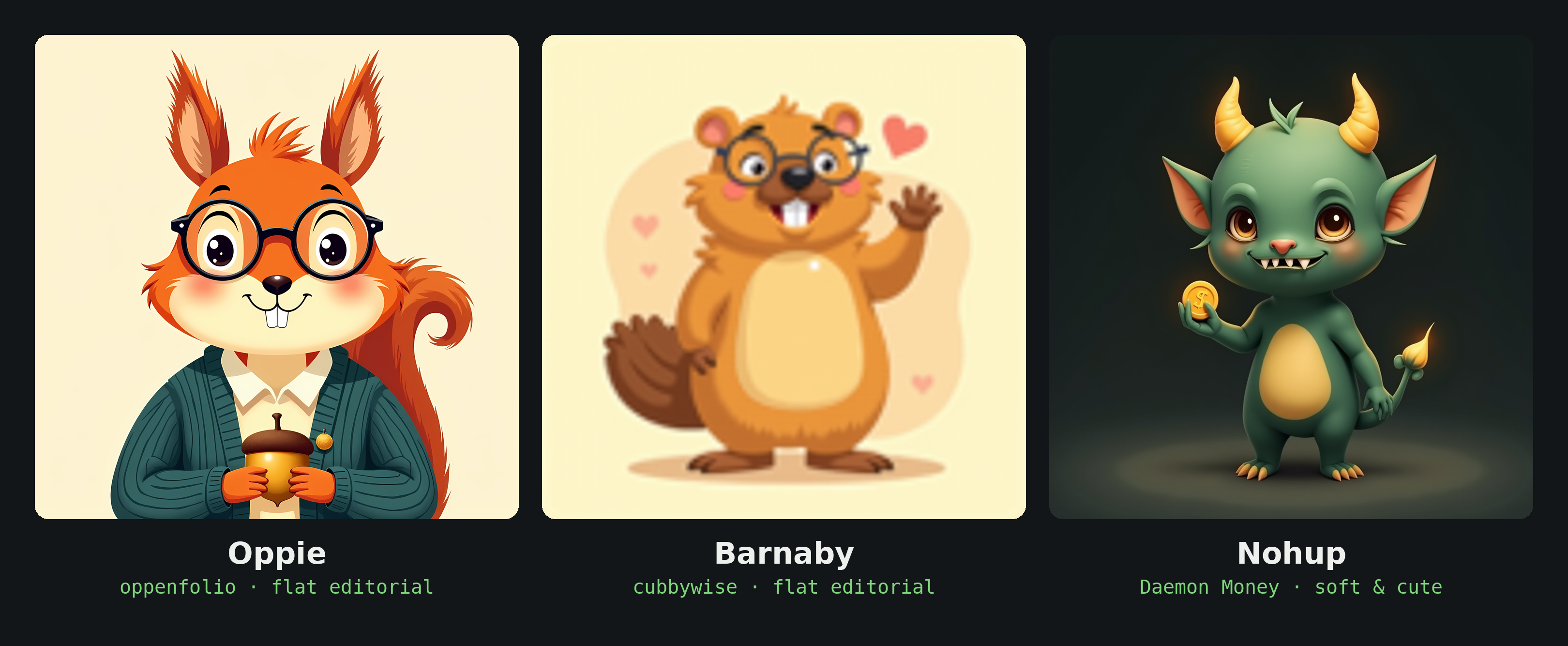
The reasoning is the transferable part, so here it is: no prompt made that call. I made it, by looking at what came out and deciding the accident was better than the plan. An agent will chase your spec faithfully to the end of the earth; noticing when what it produced beats what you asked for is a human move, and it’s one of the most valuable ones you’ve got.
What you hand off
Everything from here is the agent’s to run, and it’s the bulk of the actual labor:
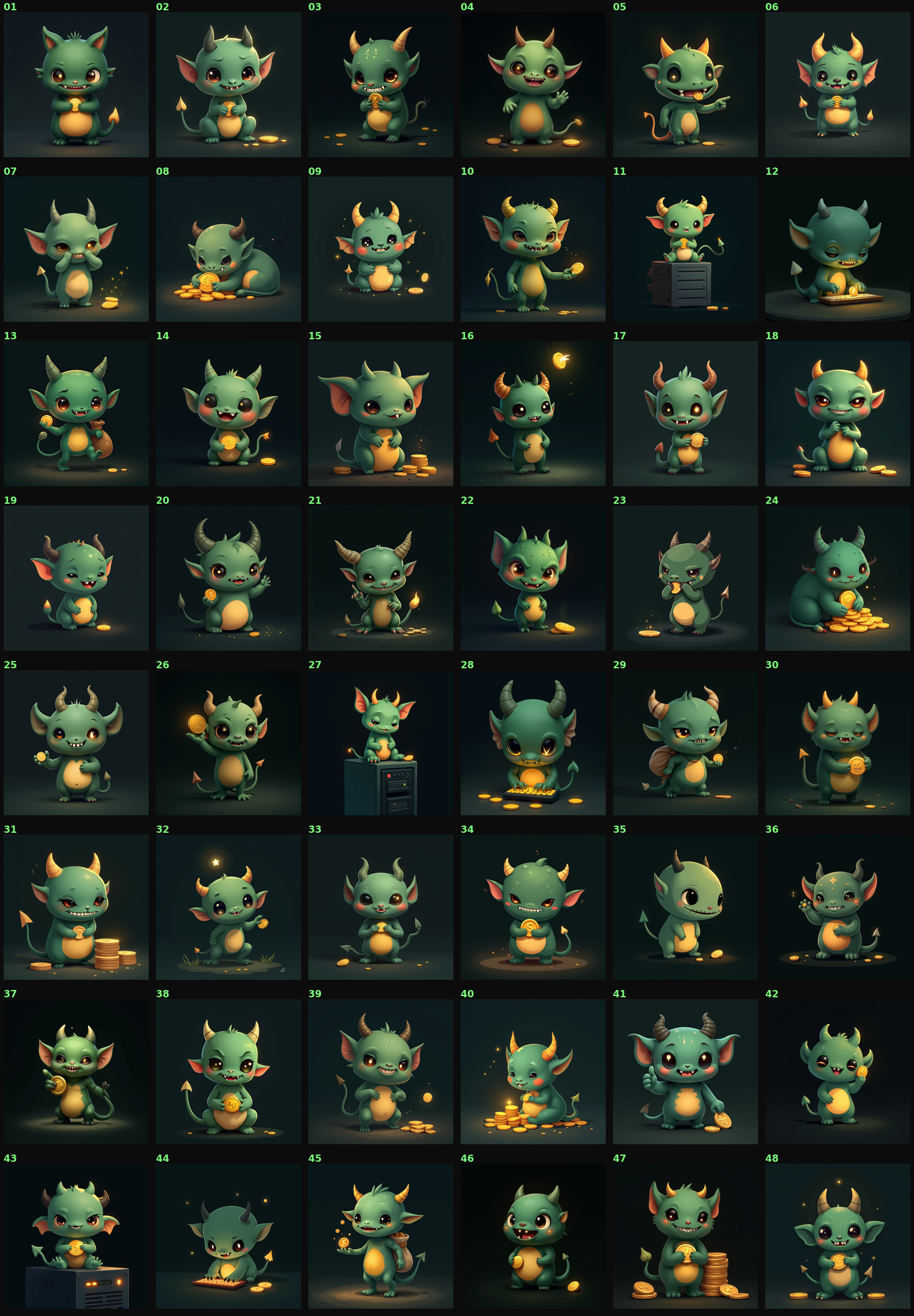
- render a small dataset of the character in that locked style — about 48 images, varied poses, angles, and expressions
- I curate it down to the ~34 keepers — one more taste step, tossing the off-model ones
- caption each image with a trigger word (I used
nohupd) so the model learns “this token means this character” - clone one of the existing training configs and point it at the dataset
- run it: ai-toolkit, ~1 hour 45 minutes on my RTX 5080
- symlink the finished LoRA into the image tool and render the poses
You don’t memorize that list. You delegate it, and you spend the attention you saved on the four decisions instead. The configs are the same ones every mascot in the fleet already shares — the reuse is the point.
The payoff: watch it click
Here’s how you know it worked. Every 250 steps, the trainer re-renders the same test prompts, so you can watch the character climb out of the noise — a murky, half-formed shape at first, then, a few hundred steps in, the daemon pulls into focus and stays there: the horns, the coin-gold belly, the glowing cursor-eyes, the same character every single time.

You’re not writing a paragraph of prompt and hoping anymore. You’ve taught the model the character exists — so you can summon him on demand, in any pose, forever.
Decision 4: knowing when to stop
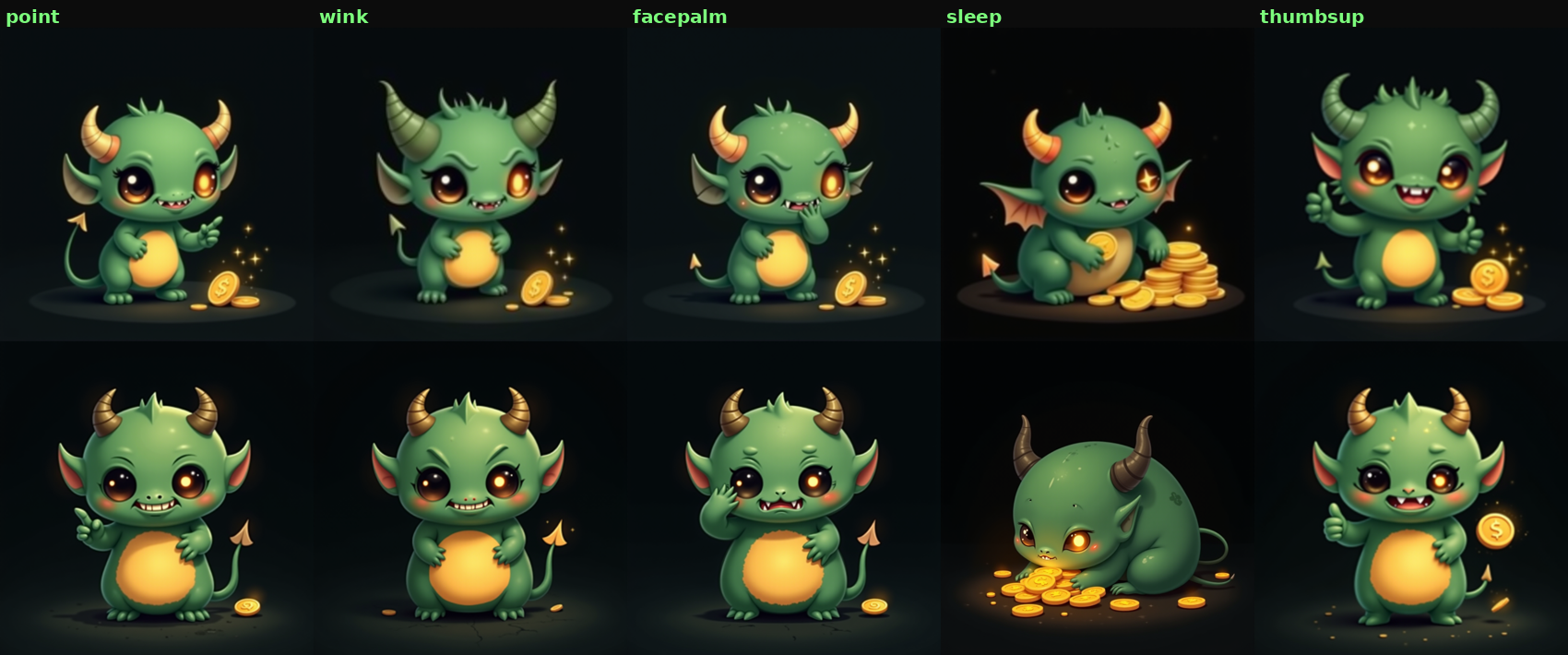
The last call is good enough. Across all five poses the character came out dead-consistent — same horns, same coin-gold belly, same glowing eyes. Two poses were imperfect: I asked for a wink and a sleeping pose, and the model stubbornly kept his eyes open both times (you can see it in the grid above). I shipped anyway.
A mascot that’s 100% consistent and 90% expressive beats one I burn another three hours polishing, and I can fix those two poses in ten minutes the day I actually need them. Knowing what’s worth finishing — versus what’s worth leaving a little rough and moving on — is the last thing the agent can’t decide for you.
So, “I trained a mascot”
The honest version: I made four decisions — why, which, keep-the-happy-accident, and stop — and directed an agent through everything in between. That’s the shape of nearly all of this work now. The machine does the labor; you get paid for the judgment. If you’ve been assuming you need to become a machine-learning engineer to have a character like this, you don’t. You need taste, a few opinions, and the willingness to say “no, keep the cute one.”
Next: I’m cutting the training run into a short video for Instagram — the character resolving into focus, step by step. Same build, second life.