
The Why
I run a fleet of tiny AI businesses off one server. Here's the honest shape of the machine.
I counted this morning. Twenty-four domains point at one server.
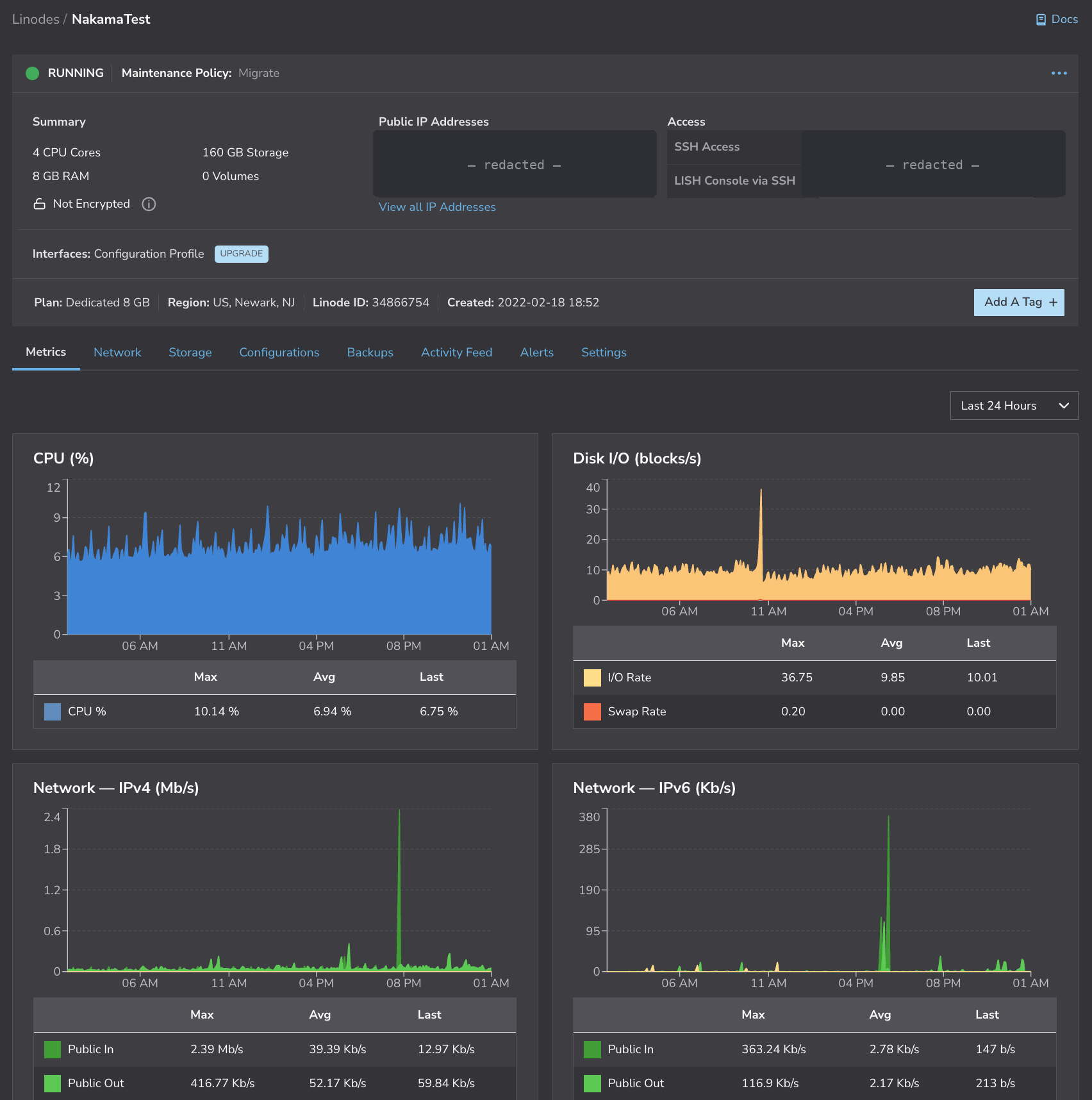
Not twenty-four businesses — let’s be honest right away. Maybe a dozen of them actually serve something. The rest are parked ideas, half-built experiments, and a couple of names I bought at 1 a.m. because they were free and I got excited. All of it runs on a single modest Linode in a Newark data center that’s been humming along since 2022.
So the reasonable question — the one the “make money with AI” crowd never quite answers honestly — is: what am I actually doing here?
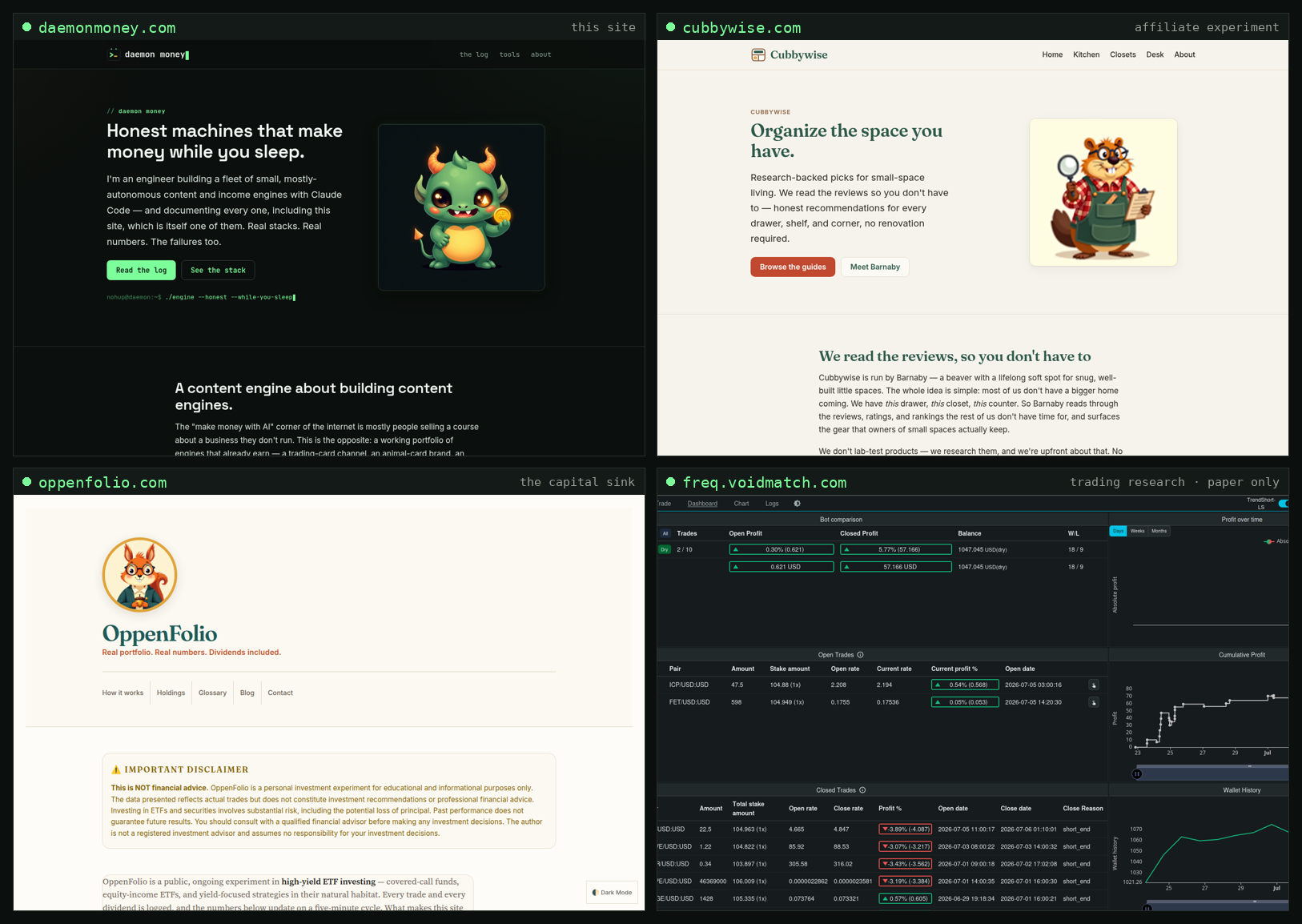
First, the unglamorous truth: it’s a hobby
I build these things because it is genuinely, stupidly fun.
I’ve been an engineer for twenty-plus years, and somewhere in the last two I fell in love with the feeling of pointing an AI agent at a real problem and watching a whole system — content, pipeline, automation, the site it all lands on — actually work. Not a demo. A thing on the open internet that a stranger can load. You can’t get that feeling from a notebook on your laptop. To feel it you have to participate in the internet for real: lease a box, point domains at it, stand up the plumbing, and let the thing run.
So the first honest answer is that a lot of people restore old motorcycles or brew beer in the garage. I stand up little autonomous businesses and watch them tick. If they never made a dime, I’d probably still do it.
But I’m not only doing it for fun — and I have receipts
Here’s the part that separates this from a daydream: I already know a machine like this can pay, because one of mine does.
For years I’ve quietly run a trading-card channel — the old-fashioned way, on camera, by hand, opening packs and showing cards to the world. It is the opposite of autonomous; it’s me and a camera and a lot of packing tape. But it earns, and the numbers are real and small enough to be believable:
- ~$150/month in ad revenue on the videos
- ~$300/month in affiliate income
- The cards those videos feature get resold on eBay: ~$1,000/month gross, which nets out to $600–700 in actual cash after fees, shipping, and the cost of the cards
That’s not quit-your-job money. But it’s real, it’s been real for years, and — this is the important part — it’s enough to fund every other experiment on the server. The hand-run thing pays for the machines that are trying to learn how to run themselves.
The actual theory I’m testing
Here’s the thing about the card channel: it works because I do things. I film. I sort. I grade. I package. It cannot run without me, and it never will. That’s a job I happen to enjoy, but it’s still a job.
So the question that started all of this was: could I build something that earns without requiring me to show up every day? Not “passive income” in the fantasy sense — I’ve never seen that exist — but a machine where the daily labor is done by cron jobs and agents instead of by me, and my job is to design it, tend it, and decide when it’s honest enough to turn on.
Some of the experiments are me directly testing ideas the internet swears will make you rich: an AI-generated influencer, an affiliate site. And yeah — said out loud, that sounds exactly like the cynical thing everyone’s already sick of. Throw as much AI slop at the wall as possible until I can quit my job.
It is that, and it isn’t
The part the get-rich-quick crowd never talks about is the long game — and the long game is the entire point of this project.
The card channel was just a guy opening packs for a year and a half before it made anything beyond pocket-change ad revenue. The eBay store could only be bolted on much later, after the brand and I had earned enough trust that selling to the audience didn’t feel like a bait-and- switch. It had to be introduced gently, or the whole thing would have curdled into an obvious grift.
The new projects are the same bet. Take cubbywise — an affiliate site, on paper the most cynical get-rich-quick play in the fleet. Except right now, and for months to come, it makes exactly $0 on purpose. No ads, no affiliate tags, no funnel. It just publishes genuinely useful stuff and bakes on the internet, quietly building authority and trust. What I’m actually testing isn’t “can an affiliate site make money.” It’s “can I build enough real trust first that it could convert someday without being a scam.” The monetization is deliberately switched off while I find out.
That’s the honest shape of the whole fleet: a portfolio of small machines, most of them making nothing yet, running the long game in public.
One box, one pattern
The reason I can run a dozen of these at once is that they’re all the same machine underneath. Every engine is some version of:
   one Linode (8 GB, 4 cores, Newark)
        │
        ├── freq            — trading research (paper only)
        ├── cubbywise       — honest affiliate experiment ($0, on purpose)
        ├── an animal-card brand   ┐
        ├── a public-domain book project │  mostly pre-revenue,
        ├── a philosophy account         │  each still baking
        ├── …a dozen more                ┘
        │
        └── daemonmoney     — this site, documenting all of it

   shared stack: claude -p  ·  static site over rsync  ·  a review→publish
                 queue  ·  a mascot out front so I don't have to be
That’s it. claude -p turns a dev log into a draft, a review queue keeps a human in the loop
until it’s trustworthy, a static site gets rsynced to nginx, and a little illustrated character
fronts the brand so the engine doesn’t depend on my face. Learn the pattern once, re-skin it a
dozen times.
And the load is almost nothing. Here’s the actual server, running the whole fleet at once:
The recursion, and where the money goes
You may have noticed the trick: this site is one of the engines. Daemon Money is a content machine whose entire subject is building content machines — including itself. Every post here is the exhaust from real work on the other projects: the bugs, the autopsies, the honest numbers, the paper “profits” that aren’t real money. I’m not performing the work for the camera. The work happens anyway; the writing is just the smoke it gives off.
And the money — the little that exists, and the more I hope will follow — doesn’t go into a checking account. Every dollar any of these earns drains into one deliberate side-pocket, itself engineered to earn more (that one’s called oppenfolio, and it’s a whole post of its own — the “capital sink” tile in that grid up there). Dumping project income into your bank account just raises your spending to meet it. A separate, one-way pocket that compounds is the entire point. That’s the Daemon Money part of Daemon Money.
Next up in the log: how I named this brand by making Claude check twenty domains in four seconds — and the fifty-year-old Unix account that ruined my first choice.